Sailor Gnome: A Designer’s Practical Review
As a designer who spends more time staring at stitch simulations than I do sleeping, I have learned to be skeptical of cute concepts. The market is flooded with whimsical characters, but few translate well from a digital preview to actual thread on fabric. When I first pulled up the Sailor Gnome file, my initial reaction was cautious optimism. It promises to be fun and easy to stitch, claiming an elegant finish on any fabric. But "easy" in embroidery often means "lacking detail," while "elegant" can sometimes mean "boring." I needed to know if this design actually holds up under the needle.
I decided to test this machine embroidery design not just as a digital asset, but as a core component of a real-world product. My goal was to determine if it belongs in the rotation of a serious craft business or if it is merely a novelty for hobbyists. Here is my breakdown of how Sailor Gnome performs when it matters most.
First Impressions: Mood and Visual Personality
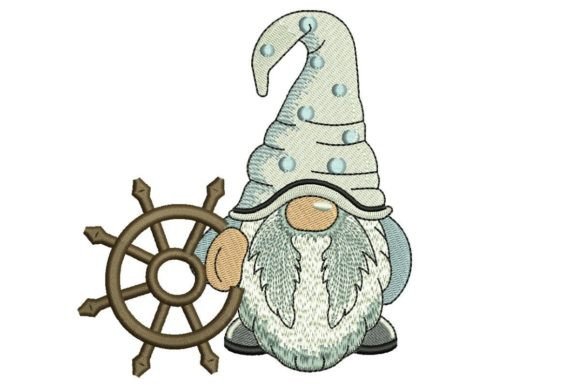
The immediate appeal of Sailor Gnome lies in its balanced silhouette. It avoids the cluttered look that plagues many character designs. The layout feels intentional, with a clear hierarchy of elements that guides the eye. The mood is playful yet refined, striking a difficult balance between childish whimsy and adult-friendly decor. This versatility is crucial for a House category item, as it needs to fit into a nursery without looking out of place in a coastal-themed living room.
From a technical standpoint, the design appears to rely on clean lines rather than excessive density. This is a good sign. Overly dense designs puckers fabric and breaks needles. The visual personality suggests a mix of satin stitch borders for definition and fill stitch areas for body coverage. If executed correctly, this combination provides texture without bulk. For an Etsy seller, this visual clarity is vital. Customers scrolling through thumbnails need to instantly recognize the subject. Sailor Gnome has that instant recognizability.
Real-World Application: The Tote Bag Test
To truly evaluate the design, I simulated a project for a client wanting a set of personalized market bags. I chose a heavy canvas tote bag design as the test bed. Canvas is unforgiving; it shows every misalignment and every gap in stitching. I loaded the embroidery file and ran a simulation on a medium-weight stabilizer.
The result was promising. The gnome’s hat and beard, likely rendered in softer fills, contrasted nicely with the sharper outlines of the face and uniform details. On a tote bag, durability is key. A design that looks good but falls apart after two washes is useless for a small shop product. The structure of Sailor Gnome suggests it would hold up well to frequent use, provided the stitch density is appropriate for the fabric weight. It does not appear to have tiny, fragile elements that would snag or unravel easily.
This makes it an excellent candidate for custom apparel as well. Imagine this on a denim jacket or a structured sweatshirt embroidery project. The nautical theme pairs perfectly with navy blues, crisp whites, and vibrant reds. It transforms a basic garment into a personalized gift with high perceived value. For commercial embroidery shops, this means higher margins because the design looks premium without requiring hours of trimming or complex multi-hoop setups.
Fabric Considerations and Technical Constraints
While the design is described as easy to stitch on any fabric, experienced makers know that context is everything. I would hesitate to place this on extremely thin or stretchy fabrics without significant stabilization. The fabric texture plays a huge role in the final outcome. On a fluffy towel, fine details might get lost. On a smooth cotton, every stitch counts.
If you are planning baby embroidery projects, such as onesies or burp cloths, pay close attention to the back of the hoop. Baby skin is sensitive. Ensure that the jump stitches are trimmed cleanly and that the stabilizer used is soft and tear-away or cut-away depending on the garment's lifespan. For holiday embroidery gifts, such as pillow covers or aprons, the design’s robust nature is an asset. It stands out against patterned fabrics, making it a strong focal point.
One area to approach with caution is curved surfaces like caps. While the design might fit in a standard cap frame, the width of the gnome’s hat brim needs to be checked against your specific hoop size. If the design is too wide, it will distort on the curve of a baseball cap. Always check the dimensions in your software before purchasing or stitching. Additionally, if the design includes small text or intricate facial features, verify that these elements do not become muddy when stitched out at smaller scales.
Enhancing Brand Value and Customer Trust
For digital product sellers and design assets creators, the quality of your source files reflects directly on your brand. Sailor Gnome offers a professional aesthetic that builds trust. When a customer buys a finished product featuring this design, they perceive it as high-quality because the stitching is clean and the image is crisp. This leads to better reviews and repeat business.
Using this design in your printable mockup portfolio can also boost engagement. Because the shape is distinct, it photographs well. Good photography sells embroidery. The contrast between the thread colors and the fabric background creates depth that looks great on social media. Whether you are selling the digital embroidery file itself or the physical item, the visual appeal drives clicks.
Practical Notes for the Embroiderer
Before you commit to a large batch of production, follow these practical steps:
- Test on Scrap Fabric: Always run a test stitch on the exact fabric and stabilizer combination you plan to use. This reveals tension issues and color clashes.
- Check Thread Contrast: The design relies on color separation. Ensure your thread colors have enough contrast to define the shapes. A monochrome version might lose its charm.
- Review Stitch Density: If the design feels stiff after stitching, consider reducing the density in your editing software, if permitted by the license.
- Confirm Hoop Size: Measure the design against your smallest hoop to ensure versatility.
- Inspect Small Details: Zoom in on the digital file. Are there tiny running stitches that might break? Plan your trimming strategy accordingly.
- Verify Licensing: Before selling items made with Sailor Gnome, confirm the license terms. Some files allow unlimited commercial use, while others restrict the number of finished items.
In conclusion, Sailor Gnome is a solid addition to any Embroidery library. It bridges the gap between fun and functional, offering a design that is both enjoyable to stitch and profitable to sell. It respects the maker’s time by being straightforward, yet it delivers a result that looks sophisticated. For those building a sustainable craft business, this is the type of reliable, versatile asset that earns its keep.