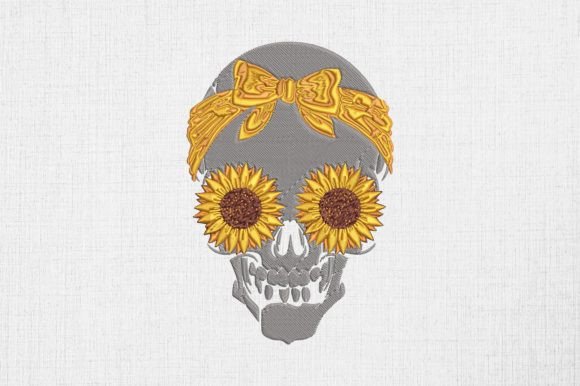
Hippie Sunflower Skull: A Designer’s Review
As an embroidery designer who has spent years digitizing patterns and consulting with small business owners, I have learned that a design is never just a picture. It is a brand asset. When I first loaded the Hippie Sunflower Skull into my software, my immediate reaction was one of cautious optimism. The concept blends two distinct visual languages: the gentle, organic warmth of a sunflower and the edgy, counter-culture vibe of a skull. For brands operating in the Boho space, this juxtaposition is not just trendy; it is strategic. It signals a personality that is both approachable and rebellious, perfect for businesses that want to stand out without losing their charm.
This review focuses on how this specific machine embroidery design performs in real-world commercial applications. Whether you run a local café, a boutique florist, a pet supply shop, or an online Etsy store, understanding the technical and aesthetic implications of this design is crucial before you commit to production.
First Impressions and Visual Personality
The Hippie Sunflower Skull does not scream "corporate." Instead, it whispers "artisan." In the context of brand identity, this is a powerful tool. Customers today crave authenticity. They want to support businesses that feel handmade and human. This design delivers that feeling instantly. The sunflower elements soften the harshness of the skull, making it suitable for a wider audience than a traditional skull motif might attract. It feels playful yet grounded, rustic yet modern.
For a creative studio or a bakery, this visual personality suggests that the owner values creativity and individuality. It is not a sterile logo; it is a piece of art. When used correctly, it elevates the perceived value of the finished product, transforming a simple tote bag or apron into a desirable fashion accessory.
Real-World Business Applications
The versatility of this design is its strongest selling point. Because it comes as a digital embroidery file with multiple formats, it can be adapted for various substrates. Here is how I envision it working for different types of small business merch:
- Embroidered Patches: This is perhaps the most lucrative application. Patches are low-risk, high-margin items. The Hippie Sunflower Skull works beautifully as an iron-on or sew-on patch for denim jackets, backpacks, and hats. It allows customers to customize their own gear, increasing engagement with your brand.
- Staff Uniforms and Aprons: For cafés and boutiques, standard uniforms can feel impersonal. Adding this design to the chest pocket of a work shirt or the corner of an apron embroidery project adds a touch of whimsy. It makes staff look like part of a creative team rather than just employees.
- Cap Embroidery: A small version of this design on the front panel of a dad hat or trucker cap is a classic move. It serves as a subtle brand marker that customers are willing to wear in their daily lives, effectively turning them into walking advertisements.
- Tote Bag Design: Canvas totes are staples for markets and bookstores. Placing this design centrally on a natural cotton tote creates a strong visual impact. The contrast between the bright yellow of the sunflower and the neutral fabric is eye-catching and photogenic, ideal for social media marketing.
Technical Considerations for Production
While the aesthetic appeal is high, the technical execution requires attention to detail. As a designer, I always advise clients to look beyond the preview image. The success of an embroidered patch or garment depends on how the design interacts with the fabric and the machine.
Stitch density is a critical factor. Skull designs often rely on solid fills to create definition, while sunflowers may use satin stitches for petals. If the density is too high, the fabric may pucker, especially on lightweight materials like t-shirts or scarves. Conversely, if the density is too low, the backing material might show through, ruining the professional look. Always request a test stitch-out on the actual fabric you intend to use.
Fabric texture also plays a significant role. This design will look crisp on smooth cotton or polyester blends. However, on textured fabrics like terrycloth towels or rough linen, fine details may get lost. For these materials, consider simplifying the design or increasing the outline thickness to ensure clarity.
Another key consideration is thread colors. The vibrancy of the sunflower relies on accurate color matching. Use high-quality rayon or polyester threads to ensure the yellows pop and the blacks remain deep. Poor quality thread can make the design look flat and muddy, undermining the premium feel you are trying to achieve.
Where to Use Caution
Not every application is suitable for every design. There are specific scenarios where the Hippie Sunflower Skull might fail if not handled carefully:
- Small Patch Sizes: If you shrink the design too much for a tiny label or a small chest logo, the intricate details of the skull and petals may merge. Always check the minimum recommended size provided with the embroidery file.
- Curved Surfaces: Embroidering on curved areas like the sleeve of a cap or the shoulder of a shirt requires proper hooping techniques. Without the right stabilizer, the design can distort. Use cut-away stabilizer for stretchy fabrics and tear-away for woven materials to maintain shape.
- Dark Uniforms: If placing this on black or navy uniforms, ensure the design includes enough light-colored threads to create contrast. A dark skull on a dark shirt will disappear. You may need to add a white underlay or border to make it visible.
- High-Wash Items: Items that undergo frequent industrial washing, such as restaurant aprons, need robust stitching. Ensure the design has sufficient tie-offs and secure start/stop points to prevent unraveling over time.
Enhancing Brand Identity and Trust
Consistency is key to building brand identity. Using the Hippie Sunflower Skull across various touchpoints creates a cohesive visual language. Imagine a customer receiving a package with a sticker of the design, opening it to find a tote bag with the same embroidery, and seeing the staff wearing shirts with the same motif. This repetition builds recognition and trust.
Furthermore, high-quality custom apparel signals professionalism. It shows that you care about the details. In the world of commercial embroidery, sloppy stitching or poor design choices can damage a brand’s reputation. Conversely, a well-executed design like this one enhances the perceived value of your products, allowing you to command higher prices.
Practical Designer Notes for Implementation
Before you launch your new merchandise line, follow these steps to ensure success:
- Test in Black and White: Print or stitch the design in monochrome first. This helps you evaluate the contrast and readability without the distraction of color. If it looks good in black and white, it will look great in color.
- Check Hoop Size Compatibility: Confirm that the design fits within your machine’s maximum hoop size. If it is too large, you may need to split the design or upgrade your equipment.
- Create a Printable Mockup: Use digital tools to place the design on photos of your actual products. This helps you visualize the scale and placement before committing to physical production. A printable mockup is also essential for client approval if you are doing custom work.
- Verify Commercial Licensing: Always read the license terms associated with the digital embroidery file. Ensure you have the right to use the design for commercial purposes, especially if you plan to sell the embroidered items directly.
- Compare with Other Design Assets: Place this design next to your existing logo and branding elements. Does it complement them? Does it clash? Visual consistency across all design assets is crucial for a polished brand presentation.
In conclusion, the Hippie Sunflower Skull is a versatile and engaging option for businesses looking to add personality to their merchandise. It bridges the gap between edgy and friendly, making it suitable for a wide range of handmade product lines. By paying attention to technical details like stitch density, stabilizer choice, and fabric compatibility, you can ensure that every embroidered item reflects the quality and creativity of your brand. Whether used on a cap, a tote, or an apron, this design has the potential to become a signature element of your business identity.